How to Make a Killing (2026)
Glen Powell Murders His Way Up the Class Ladder — But the Tone Kills the Film

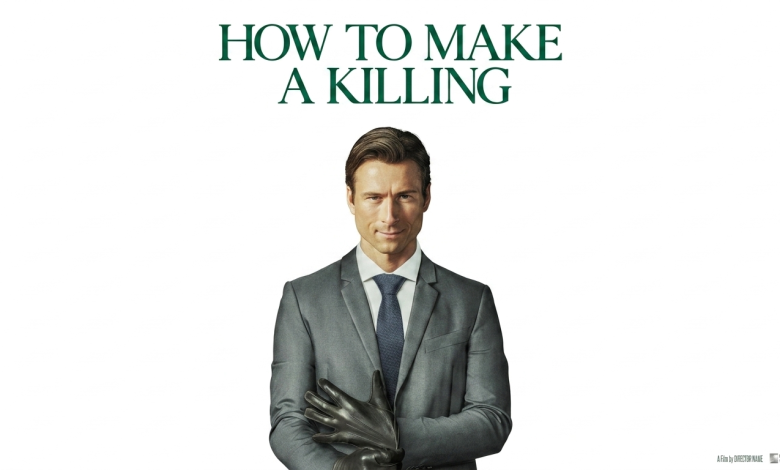
TLDR: How to Make a Killing is a 2026 A24 black comedy thriller written and directed by John Patton Ford, starring Glen Powell as Becket Redfellow — a charming young man who systematically murders his wealthy relatives to claim his family fortune. Inspired by the 1949 British classic Kind Hearts and Coronets, the film has an excellent premise, a charismatic lead, and a strong supporting cast including Margaret Qualley, Jessica Henwick, and Ed Harris. But it holds just a 46% on Rotten Tomatoes because the tone is wildly inconsistent and the script never quite decides what kind of film it wants to be. Released by A24 on February 20, 2026. Worth watching for Glen Powell fans — with tempered expectations.
Glen Powell murdering his way up the class ladder while narrating from death row. An A24 film inspired by a 1949 British classic. A cast including Ed Harris, Margaret Qualley, and Jessica Henwick.
That pitch sounds like an easy win. It should be an easy win.
And yet somehow How to Make a Killing ends up being one of 2026’s most frustrating films — not because it is bad exactly, but because it is so clearly capable of being brilliant and consistently stops itself from getting there.
Let me explain what I mean.
How to Make a Killing — Movie Details
| Detail | Info |
|---|---|
| Title | How to Make a Killing |
| Also Known As | Huntington (working title), Rothchild (original screenplay title) |
| US Release | February 20, 2026 |
| UK Release | March 11, 2026 |
| France Release | March 25, 2026 |
| Director | John Patton Ford |
| Written by | John Patton Ford |
| Inspired by | Kind Hearts and Coronets (1949) |
| Based on Novel | Israel Rank: The Autobiography of a Criminal by Roy Horniman |
| Produced by | Graham Broadbent, Pete Czernin |
| Production | Blueprint Pictures |
| US Distributor | A24 |
| International Distributor | StudioCanal |
| Cinematography | Todd Banhazl |
| Music | Emile Mosseri |
| Runtime | 105 minutes |
| Language | English |
| Budget | $15 million |
| Box Office | $5 million worldwide |
| Filmed in | Cape Town, South Africa |
What Is How to Make a Killing About?
Becket Redfellow (Glen Powell) is on death row. He is about to be executed. A priest comes to sit with him before his death, and Becket — charming, composed, and thoroughly unrepentant — begins to tell his story.
His mother Mary was a Redfellow by birth. She was cut off from the wealthy family when she refused to give up her teenage pregnancy. Becket grew up poor, watching the Redfellow fortune from the outside. Before she died, his mother told him to fight for the life he deserved.
He took that advice rather literally.
As an adult, Becket works as a suit salesman. He runs into his childhood friend Julia Steinway — now married and wealthy. He gets demoted at work. And he decides, calmly and methodically, to murder every Redfellow standing between him and his inheritance.
He starts with his cousin Taylor. Then Noah. Then Pastor Steven. Then Cassandra and MacArthur. Each murder is clean and clever. He befriends their grieving family members afterwards, charms his way into Warren Redfellow’s investment firm, falls genuinely in love with a woman named Ruth — and keeps killing people, completely without remorse.
Two FBI agents circle him. Julia appears and threatens to expose him unless he pays her. And the final Redfellow — his grandfather Whitelaw, played by Ed Harris — turns out to have plans of his own.
The story is gripping on paper. The execution is where it all gets complicated.
Full Cast Breakdown
| Actor | Character |
|---|---|
| Glen Powell | Becket Redfellow — charming, methodical serial killer |
| Margaret Qualley | Julia Steinway — Becket’s childhood friend, later his blackmailer |
| Jessica Henwick | Ruth — Noah’s girlfriend, later Becket’s partner |
| Bill Camp | Warren Redfellow — Becket’s uncle, offers him a job |
| Zach Woods | Noah Redfellow — Becket’s cousin |
| Topher Grace | Pastor Steven J. Redfellow — Becket’s cousin |
| Ed Harris | Whitelaw Redfellow — Becket’s grandfather, the final target |
| Bianca Amato | Cassandra Redfellow — Becket’s aunt |
| Raff Law | Taylor Redfellow — Becket’s first victim |
| James Frecheville | Lyle — Julia’s husband |
| Nell Williams | Mary Redfellow — Becket’s mother |
This cast list reads like a dream. And individually, most of them deliver. The problem is not the performances. It is that the script does not always know what to do with them.
The Kind Hearts and Coronets Connection
Before watching How to Make a Killing, you should know what it is inspired by.
Kind Hearts and Coronets (1949) is a British black comedy masterpiece in which Alec Guinness plays all eight members of a noble family being eliminated one by one by the charming, sardonic Louis D’Ascoyne Mazzini. It is one of the cleverest, darkest, most elegantly constructed comedies ever made. The tone is perfectly calibrated — arch, witty, and completely committed to its own moral universe in which murder is simply a matter of social advancement.
John Patton Ford — who made the excellent Emily the Criminal (2022) — decided to make a loose American adaptation of that concept. A wealthy dynasty. A charming social climber. Systematic murder. Death row narration.
The DNA is clear. The execution of that DNA is where How to Make a Killing loses the plot.
Kind Hearts and Coronets worked because it never wavered in its tone. It was consistently, deliciously cold-blooded. How to Make a Killing cannot decide whether it wants to be a darkly funny romp, a genuine thriller, a social satire, or a slightly melancholy character study. It tries to be all four. It succeeds fully at none.
Benjamin Lee at The Guardian described it as stylishly made but ultimately a real mess. The Rotten Tomatoes consensus puts it bluntly: deploying Glen Powell’s magnetic likability to head-scratching ends, this tonally bizarre comedic thriller wants to eat its rich and have it, too. Both assessments capture the central problem with precision.
Glen Powell — Magnetic Even When the Script Fails Him
Here is the honest truth about this film: Glen Powell is the reason to watch it.
After Top Gun: Maverick and Anyone But You, Powell has established himself as one of the most watchable screen presences in Hollywood right now. He has Cary Grant energy — that specific combination of easy charm, physical confidence, and a slightly dangerous smile that makes you want to watch him even when he is doing something terrible.
In How to Make a Killing, he also narrates the entire film in a cool, detached voice from death row. That framing device is directly borrowed from Kind Hearts and Coronets, and Powell handles it with the right amount of dry wit.
When the script gives him space to be genuinely funny and genuinely sinister at the same time — he is extraordinary. There is a scene involving a funeral reception where Becket charms his way into Warren Redfellow’s firm literally hours after murdering Warren’s son, and Powell plays it with a breezy composure that is genuinely disturbing. The best scenes in the film are the ones where the dark comedy and the menace co-exist perfectly.
The problem is that those scenes are not consistent enough.
Margaret Qualley — Given Too Little to Do
Margaret Qualley is one of the most interesting actors of her generation. Her performances in The Substance, Poor Things, and Once Upon a Time in Hollywood show enormous range and commitment.
In How to Make a Killing, she plays Julia — Becket’s childhood friend who becomes his blackmailer in the final act. Julia is the most fascinating character in the script on paper. She is essentially the film’s mirror image of Becket — someone who also wants more than her circumstances allow, who is also willing to manipulate and deceive to get it. The difference is that she does it through leverage rather than murder.
That dynamic could be electric. The film does not give it enough room.
Qualley appears in the first third, disappears for almost the entire middle of the film, and returns in the final act. The chemistry between Powell and Qualley works. There simply is not enough of it.
Jessica Henwick as Ruth — The Film’s Moral Heart
Jessica Henwick plays Ruth — a woman who falls genuinely in love with Becket without knowing what he is.
Her character is the film’s closest thing to a moral anchor. Ruth is warm, straightforward, and completely sincere. And the tragedy of her arc — the moment she returns his mother’s locket to him outside the prison without saying a single word — is the film’s most emotionally effective moment.
Henwick does excellent work in a role that is written to contrast with everyone else’s moral complexity by simply being a good person. Her final scene lands precisely because of how much she put into the quieter scenes earlier.
Ed Harris and the Final Act
Ed Harris as Whitelaw Redfellow — the elderly patriarch who turns out to have a shotgun and plans of his own — is one of the film’s best surprises.
Whitelaw is not a straightforward victim. He knows Becket is a threat before Becket even arrives. The dinner scene between them is the best-written sequence in the film — a slow-burn confrontation between two people who are both far more dangerous than they appear. Harris brings the kind of quiet, coiled menace he does better than almost anyone working today.
When Whitelaw locks the doors and reaches for the shotgun, the film briefly becomes exactly what it should have been all along: an elegant, dark, genuinely tense battle of wits between two equally matched opponents. And then Becket kills him in self-defence, becomes the sole inheritor, and gets immediately arrested for a murder he did not commit. That twist is clever and satisfying.
The problem is that getting to that moment requires sitting through tonal lurches that undercut the film’s momentum repeatedly.
The Title Journey — From Rothchild to Huntington to This
The film’s title changes tell an interesting story about how long this project has been in development.
John Patton Ford’s original screenplay appeared on the prestigious Hollywood Black List in 2014 — under the title Rothchild. In 2019, it was announced with Jon S. Baird directing and Shia LaBeouf and Mel Gibson starring. That version never happened.
Development resumed in March 2023 with Ford now directing himself. The film was titled Huntington at that point. Glen Powell was cast in January 2024. The film was shot in Cape Town, South Africa — employing hundreds of local cast and crew — through mid-2024.
In November 2025, Powell mentioned to The Hollywood Reporter that the film was getting a new title. A week later it was revealed as How to Make a Killing. A24 confirmed the February 2026 US release date in the same announcement.
Twelve years from Black List script to cinema screens. The film carries that long development in some of its rougher edges.
What Works
The premise is irresistible. Glen Powell is genuinely excellent — this is him playing against type in the most compelling way. The individual murder sequences are inventive and darkly funny. Ed Harris’s Whitelaw is a wonderful creation. The Cape Town locations, standing in for a vaguely timeless American wealth landscape, look beautiful on screen. Emile Mosseri’s score has a playful, slightly sinister quality that fits perfectly when the film allows itself to be purely dark comedy.
The 105-minute runtime means it never outstays its welcome, even when it frustrates.
What Does Not Work
The tone is the film’s killer — pun intended.
How to Make a Killing cannot commit to being a true black comedy. It keeps softening Becket with genuine warmth around Ruth, which makes him more sympathetic but less funny. It keeps trying to make you feel the weight of his murders rather than laughing at them. And it cannot decide whether Julia is a villain, a mirror image of Becket, or a love interest.
A 46% Rotten Tomatoes score from 131 critics and a 51 out of 100 on Metacritic confirm that the critical response was genuinely split. Audiences who came expecting pure dark comedy were frustrated. Audiences who came expecting a proper thriller were confused. The people who loved it most seemed to be those who accepted the tonal inconsistency as part of its charm.
You can check the full cast and production credits on the IMDB page for How to Make a Killing.
The Box Office Reality
How to Make a Killing earned $5 million worldwide against a $15 million budget. That is a clear commercial loss, though A24 films are often evaluated on cultural impact rather than pure box office returns.
In its opening weekend, it earned around $3.7 million — finishing outside the top three domestically, against competition from films like the Glen Powell-adjacent buzz cycle and stronger February releases.
The A24 brand carries a specific kind of audience, and How to Make a Killing did not fully deliver the kind of word-of-mouth those audiences generate when they connect with a film. It is more of a shrug than a love letter from most of the people who saw it.
How It Fits Into 2026’s Hollywood Landscape
2026 has had some excellent dark comedy and crime films. We covered Crime 101 — a far more confident crime film with Chris Hemsworth and Halle Berry that knew exactly what it was and delivered it with style. We also reviewed Send Help — Sam Raimi’s survival horror comedy that showed what happens when a dark genre comedy fully commits to its own internal logic.
Compared to both of those, How to Make a Killing feels like a film that was too cautious. It had all the ingredients to be as sharp and ruthless as its title promised. It never quite trusted itself to be that film.
For more Hollywood dark comedy and thriller reviews, keep visiting HDMovies4U — we cover every release worth knowing about so you can make an informed decision before you watch.
Should You Watch It?
If you are a Glen Powell fan — yes. This is him doing something genuinely different from the rom-com and action territory he has been operating in, and watching him inhabit Becket Redfellow is worth it even when the script lets him down.
If you love dark comedies — watch Kind Hearts and Coronets first. Then watch this as a loose, imperfect companion piece. You will appreciate what it gets right more clearly.
If you are expecting a tightly constructed, tonally consistent black comedy thriller — temper those expectations significantly.
My rating: 2.5 out of 5 stars. A stylish, frustrating film that has flashes of the brilliance it could have been, anchored by a Glen Powell performance that deserves better material.