Wuthering Heights (2026)
Emerald Fennell's Wild, Carnal Take on Brontë Is Gorgeous and Divisive in Equal Measure

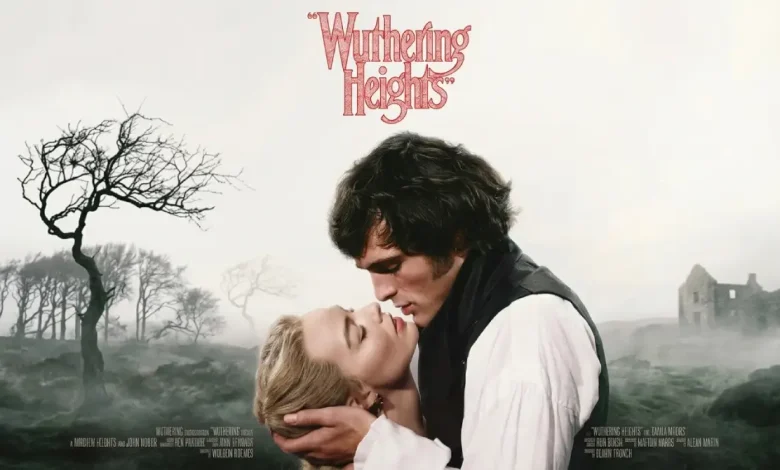
TLDR: “Wuthering Heights” is a 2026 romantic period drama written and directed by Emerald Fennell, starring Margot Robbie as Catherine Earnshaw and Jacob Elordi as Heathcliff. It is a loose, deliberately excessive adaptation of Emily Brontë’s 1847 novel — carnally charged, visually stunning, and deeply divisive. Critics split almost exactly down the middle. Audiences gave it a B on CinemaScore. It earned $177.3 million worldwide against an $80 million budget, releasing on Valentine’s Day weekend 2026. Charli XCX made an entire original album for it. You will either love this film or find it hollow. Possibly both at once.
Let me start with a confession.
I have read Wuthering Heights twice. Once as a teenager, when I found Heathcliff brooding and magnificent and completely misunderstood. Once in my twenties, when I found him controlling, vengeful, and genuinely terrifying. Emily Brontë wrote a book that changes depending on who you are when you read it. That is the magic and the curse of adapting it for film.
Emerald Fennell — who directed Promising Young Woman and Saltburn — described her intention for this film very clearly. She wanted to recreate the feeling of a teenage girl reading this book for the first time. Not a faithful retelling. Not a literary analysis. A feeling.
That goal is either the smartest or the most reckless thing a director could say about a 175-year-old classic. Having now watched the film, I can tell you it is somehow both.
“Wuthering Heights” (2026) — Movie Details
| Detail | Info |
|---|---|
| Title | “Wuthering Heights” (stylised with quotation marks) |
| World Premiere | January 28, 2026 — Grauman’s Chinese Theatre, Los Angeles |
| US/UK Release | February 13, 2026 (Valentine’s Day Eve) |
| Director | Emerald Fennell |
| Written by | Emerald Fennell |
| Based on | Wuthering Heights — novel by Emily Brontë (1847) |
| Produced by | Emerald Fennell, Josey McNamara, Margot Robbie |
| Production | MRC, LuckyChap Entertainment, Lie Still |
| Distributor | Warner Bros. Pictures |
| Cinematography | Linus Sandgren |
| Music Score | Anthony Willis |
| Songs | Charli XCX (original album) |
| Runtime | 136 minutes |
| Format | IMAX, standard |
| Filmed On | 35mm VistaVision cameras |
| Budget | $80 million |
| Box Office | $177.3 million worldwide |
A note on the title. The quotation marks are intentional and deliberate. Fennell explained that any adaptation of a novel this dense should be in quotation marks — because what she made cannot truly be called Wuthering Heights. It is a version of it. That honesty in the title is one of the smartest things about the entire project.
What Is “Wuthering Heights” About?
The story follows Catherine Earnshaw (Margot Robbie) and Heathcliff (Jacob Elordi) from their childhood bond through their adult tragedy.
Heathcliff arrives at Wuthering Heights as a young boy, rescued from the Liverpool streets by Cathy’s father and brought into the household as Cathy’s companion — called her “pet.” They grow up inseparable. The moors become their shared world. Their connection is passionate, feral, and completely outside of anything social convention can contain.
As they get older, Cathy makes the pragmatic decision to marry Edgar Linton (Shazad Latif) — a wealthy, respectable man who can lift her out of Wuthering Heights’ decay. Heathcliff overhears part of her reasoning — the part about how marrying him would degrade her — but leaves before he hears the rest. The part where she says their souls are entwined.
He disappears. He returns five years later, mysteriously wealthy, short-haired, and full of a bitterness that has hardened into something close to hatred — directed at everyone, including Cathy, for the love he feels he was denied.
What follows is obsession, manipulation, grief, and a love that survives death but destroys everything around it.
Fennell tells all of this with a camera that lingers on desire, sensation, and the physical world in obsessive detail. She is more interested in what these people feel in their bodies than what they think in their minds.
Full Cast Breakdown
| Actor | Character |
|---|---|
| Margot Robbie | Catherine “Cathy” Earnshaw |
| Jacob Elordi | Heathcliff |
| Hong Chau | Nelly Dean — Cathy’s paid companion and confidante |
| Shazad Latif | Edgar Linton — Cathy’s wealthy suitor and eventual husband |
| Alison Oliver | Isabella Linton — Edgar’s ward, infatuated with Heathcliff |
| Martin Clunes | Mr. Earnshaw — Cathy’s alcoholic, abrasive father |
| Ewan Mitchell | Joseph |
| Charlotte Mellington | Young Catherine Earnshaw (film debut) |
| Owen Cooper | Young Heathcliff (film debut, known from Adolescence) |
| Vy Nguyen | Young Nelly Dean (film debut) |
| Paul Rhys | Heathcliff’s father |
| Vicki Pepperdine | Sister Mercy |
| Jessica Knappett | Mrs. Burton |
Owen Cooper — who plays young Heathcliff — is the same actor who made such an impact in the Netflix series Adolescence earlier in 2025. His brief appearance here adds a weight to young Heathcliff that the film needs.
Emerald Fennell — The Most Interesting Risk-Taker Working in Film
Promising Young Woman was cold, controlled, and simmering with barely contained fury. Saltburn was operatic, obsessive, and genuinely unsettling. “Wuthering Heights” is the third chapter in what is becoming one of the most distinctive filmographies in contemporary cinema.
Fennell did not approach this as a prestige literary adaptation. She approached it as a passion project rooted in a teenage reader’s first visceral encounter with the story. She watched thirteen films she described as love stories that challenged, subverted, or obliterated the conventions of the genre — including Crash (1996), Bram Stoker’s Dracula (1992), The Night Porter (1974), The Handmaiden (2016), and Romeo + Juliet (1996). That list tells you everything about her tonal intentions and none of them are what you would expect from a period romance.
The result is a film that prioritises sensation and obsession over narrative clarity. Some scenes are astonishing. Some feel indulgent to the point of incoherence. And some — particularly around Cathy’s desire and Heathcliff’s eventual return — are among the most visually beautiful romantic scenes in recent cinema.
Warner Bros. won the distribution rights at $80 million — beating Netflix’s $150 million bid. The reason Fennell and Margot Robbie chose Warner Bros. over Netflix’s higher offer was simple: they wanted a global theatrical release and a serious marketing campaign. After the Barbie experience, LuckyChap and Warner Bros. already trusted each other. That partnership mattered more than the extra money.
Margot Robbie and Jacob Elordi — Undeniable On Screen
Here is where the film is hardest to argue with.
Margot Robbie as Cathy is extraordinary. She plays desire, guilt, and grief with an openness that is genuinely difficult to watch in the best possible way. Cathy is not a sympathetic character in any simple sense — she is selfish, she is contradictory, she hurts people she loves. Robbie never asks you to forgive her. She asks you to understand her. That is harder, and she does it completely.
Jacob Elordi had been considering taking a break from acting before Fennell offered him Heathcliff without an audition. He did not need to read for the part. Fennell said he looked exactly like the illustration on the first copy of the book she read. On screen, he is physically commanding in a way the role requires — tall, dark, and carrying an anger that slowly poisons everything around him. His best scenes come in the second half, when Heathcliff’s return forces him to play resentment and grief and desire all at the same time.
The Atlantic’s David Sims called the film a heaving, rip-snortingly carnal good time — and while that description left some critics cold, it captures exactly what Robbie and Elordi are doing in the best scenes between them.
The Casting Controversy Around Heathcliff
This needs to be addressed directly because it was a significant part of the conversation around the film.
In Brontë’s novel, Heathcliff is described as resembling a dark-skinned gipsy or Lascar — a South or Southeast Asian sailor. His racial ambiguity is central to the novel’s themes about class and social exclusion. He is an outsider not just because he is poor but because his appearance marks him as other to the English society that rejects him.
Jacob Elordi is white. His casting attracted immediate controversy when announced in September 2024. Fennell defended it in September 2025, saying Elordi looked exactly like the illustration of Heathcliff on the first book she read.
I understand both sides of this debate. On one hand, the racialized aspect of Heathcliff’s outsider status is genuinely important in the source material. On the other, Fennell has explicitly stated she is making a version — not a faithful adaptation — and the quotation marks in the title are her way of acknowledging that distance. Whether that justification is sufficient is a question you will have to answer for yourself.
The Charli XCX Album — An Inspired Choice
Here is something that should not work but absolutely does.
Charli XCX composed an entire original album called Wuthering Heights to accompany the film. Not just a few songs. A full album of original music.
The lead single “House,” featuring Welsh musician John Cale, was released on November 10, 2025 — a goth rock track that was far darker and stranger than anything in Charli XCX’s recent commercial work. “Chains of Love” followed on November 13 alongside the theatrical trailer, using the song’s pulsing, obsessive energy to immediately establish the film’s tonal register. “Wall of Sound” arrived on January 16, 2026. And “Always Everywhere” dropped on February 13 — the same day as the film’s theatrical release — alongside its own music video.
The full album released simultaneously with the film. The decision to partner with an artist at the peak of her cultural influence — fresh from the Brat era of 2024 — gave “Wuthering Heights” a cultural footprint that extended well beyond what a traditional period drama score could achieve. It also felt genuinely right for a film about obsessive love told through the lens of heightened, visceral sensation. Charli XCX is herself an artist of obsessive intensity. The pairing was inspired.
The Technical Craft — Shot on 35mm VistaVision
This is something I think deserves particular attention.
Linus Sandgren — who won an Academy Award for his cinematography on La La Land — shot “Wuthering Heights” on 35mm VistaVision cameras. That format, originally developed in the 1950s, produces a wider, sharper image than standard 35mm. It was recently used to great effect in The Brutalist (2024), and Sandgren and Fennell chose it specifically for the way it renders the Yorkshire Dales landscape.
The Yorkshire Dales location shooting — in the valleys of Arkengarthdale and Swaledale, the village of Low Row, and the Yorkshire Dales National Park — combined with VistaVision’s wider frame creates a film that is visually extraordinary in ways that screenshots do not capture. The moors look genuinely wild and genuinely ancient. The interiors of Wuthering Heights feel suffocating in exactly the right way.
Filming took place from late January to early April 2025 at Sky Studios Elstree and on location across Yorkshire. During the first week, Jacob Elordi accidentally gave himself a second-degree burn by stepping back against a steaming hot brass knob during a shower scene and had to go to hospital. He has also mentioned discussing giving himself Heathcliff’s back scars personally. The physical commitment to the role was clearly total.
What the Critics Said — A Genuine Split
“Wuthering Heights” holds a 58% score on Rotten Tomatoes from 314 critics. Metacritic sits at 55 out of 100. CinemaScore audiences gave it a B.
The RT consensus describes it as liberally adapting Brontë’s classic with a heavy dose of carnality and chic stylization — not the stuff of high literature but a visually vibrant pleasure. That balanced consensus is actually more accurate than most.
David Sims at The Atlantic was among the enthusiasts — calling it a heaving, rip-snortingly carnal good time and praising Fennell’s willingness to embrace the story’s primal dimensions fully.
Peter Bradshaw at The Guardian was the most prominent critic in the other camp — describing it as an emotionally hollow, bodice-ripping misfire. The Globe and Mail’s Barry Hertz was harsher still, arguing that no amount of gorgeous visual composition could distract from what he called gaping holes in everything on screen.
Mick LaSalle at the San Francisco Chronicle gave what I think is the most insightful negative review — arguing that by giving Cathy and Heathcliff an intense sexual relationship, Fennell removes the spiritual and sexual longing that gives the novel its power without replacing it with anything of equivalent force.
That critique is valid. It is also a response to a very deliberate choice Fennell made. Whether you agree with the choice determines whether you see the film as a bold reimagining or a miscalculation.
The Box Office — Below Expectations but Still Profitable
“Wuthering Heights” opened on Valentine’s Day weekend 2026 — releasing on February 13 to capture the romantic weekend audience. Variety projected $50 to 55 million domestically in its four-day Presidents’ Day opening.
It earned $37.5 million domestically over that four-day period — topping the box office but finishing below projection. Globally, it opened to $83 million across all markets. By late February, the worldwide total had reached $177.3 million.
Against an $80 million production budget, that is a genuine commercial success. Not the breakout Barbie-era LuckyChap triumph Warner Bros. may have hoped for, but a profitable theatrical film by any conventional measure.
Its second weekend dropped to $14.2 million domestically, finishing second behind Goat. That 62% drop suggests mixed word of mouth — some people loved it deeply and told everyone, others were disappointed and said so just as loudly.
How It Fits With Other 2026 Films
“Wuthering Heights” released on the same weekend as Crime 101 and Good Luck, Have Fun, Don’t Die — both of which we reviewed at HDMovies4U. It topped both of them at the domestic box office that weekend despite finishing below its own projections.
It is a reminder that even a mixed-reviewed, divisive film with genuine star power and cultural noise can win a weekend. And that Emerald Fennell’s name alone — following Saltburn’s cultural impact — carries real commercial weight.
For more Hollywood film reviews and complete streaming guides, keep visiting HDMovies4U — we cover every release worth knowing about.
Should You Watch It?
If you love Emerald Fennell’s previous work — Promising Young Woman, Saltburn — yes, watch this immediately. It is entirely consistent with her sensibility and her ambitions. You will recognise exactly what she is doing and find it thrilling.
If you love Wuthering Heights the novel and want a faithful, emotionally complete adaptation — approach with caution. This is not that. It is a film about the feeling of the novel more than the structure of it.
If you are going on a Valentine’s Day date and want something visually gorgeous, a little dangerous, and deeply romantic in the messiest possible way — this is genuinely perfect.
My rating: 3.5 out of 5 stars. Visually extraordinary, carnally committed, and anchored by two leads who give everything to the material. Emotionally it does not always land. But when it does — particularly in the film’s final scenes — it hits with the specific force only the greatest love stories can generate.
Check the full cast and production credits on the IMDB page for “Wuthering Heights” (2026).